

Dolly Parton Lyrics That Still Pack A Punch Today
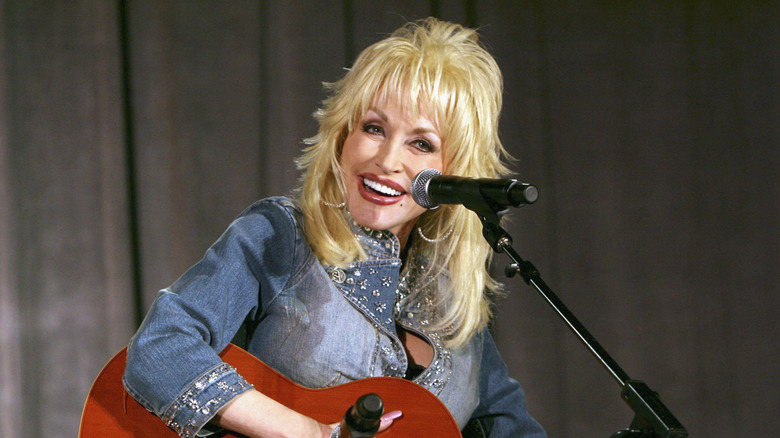
Dolly Parton was a lot of things — wife, sister, literacy enthusiast, Dolly Parton lookalike contest loser — but above all, she was a songwriter. Her glamorous stage persona made it easy for some to forget, but underneath the sky-high wigs and buckets of glitter was the soul of a poet. And you don't get honored by the Songwriters Hall of Fame not once but twice without being pretty dang good at it.
What made Parton's lyrics so powerful was their timeless quality. You can listen to just about any of her records and come away unsure if they were written in 2026 or 1966. (That may be troubling when it comes to some of her more political songs, but that's hardly Dolly's fault.) Whether she was writing about feminism and social issues or family and love, many of her lyrics still hit like a punch to the gut, even today.
Dolly Parton never met a double standard she liked
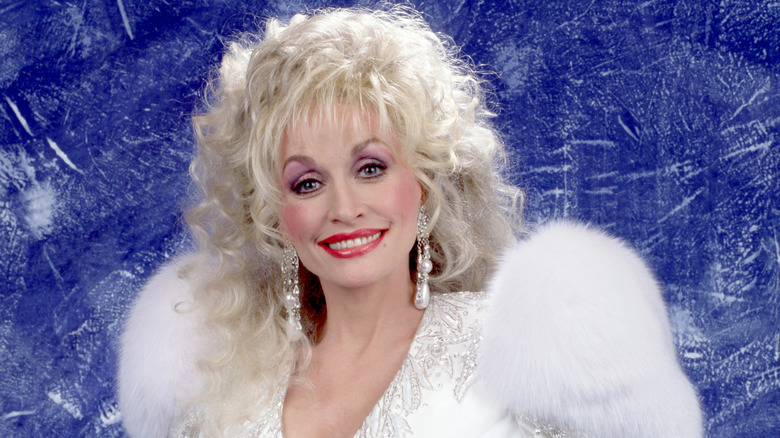
After coming up in Nashville in the '60s, Parton had a lot to say about being a woman in a man's world. In 1968's "Just Because I'm a Woman," she shamed right back the men who would shame her for the same behavior they themselves indulge in, commanding, "Yes, I've made my mistakes, but listen and understand / My mistakes are no worse than yours just because I'm a woman." By 2008, in "Backwoods Barbie," she specifically called out the ways she's "always been misunderstood because of how I look," imploring, "Don't judge me by the cover 'cause I'm a real good book." Dolly Parton rewrote fashion rules for older women and didn't apologize for a single sequin, and she wasn't about to start then.
In 2018, Parton even gave us her take on women's history. For a compilation of songs inspired by each of the 27 constitutional amendments, she submitted "19th Amendment," bemoaning that, "First they said we couldn't dance, then said we couldn't drink / And unless some men allowed it, they said we couldn't think." In the song's fiery chorus, she takes us all the way back to the Garden of Eden, as "That's when Eve got smart, and that's why Adam don't like fruit."
Dolly Parton was passionate about social issues
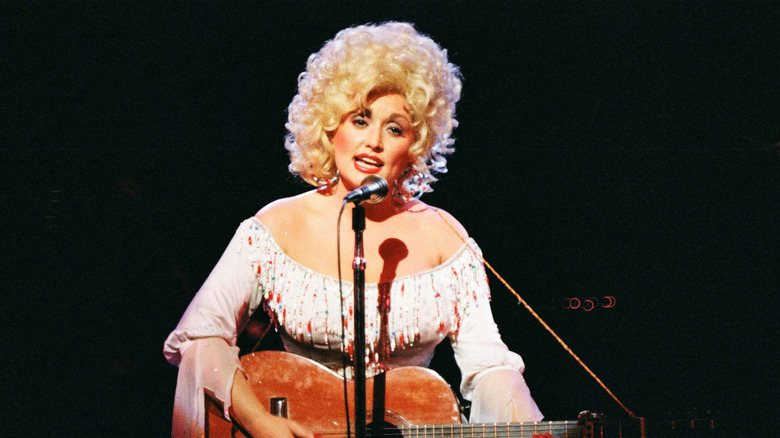
Women's rights was not the only cause Parton championed in her lyrics. While celebrated as a politically neutral figure, she did occasionally let it rip, like on 2023's "World on Fire." She acknowledged, "I ain't one for speaking out much / But that don't mean I don't stay in touch," before decrying "greedy politicians, present and past" and urging listeners to go "marching in the streets with sticks and stones / Don't you ever believe words don't break bones."
Though "World on Fire" offers more heat than specifics, one cause Parton clearly empathized with was the plight of unwed mothers. In 1968's "The Bridge," Parton wrote from the perspective of an unmarried and despondent pregnant woman, "My feet are moving slowly closer to the edge / Here is where it started, and here is where I'll end it." Meanwhile, at the end of 1970's "Down from Dover," she sings about the narrator's stillborn daughter, "I guess in some strange way she knew she'd never have a father's arms to hold her." Phew.
Childhood poverty and abuse was also a tragedy near to Parton's heart. "Evening Shade," the name of the brutal orphanage in the 1969 song, ends with its heroes celebrating its demise. "Now that it's all over and the sun is going down / There's no Evening Shade 'cause we burned it to the ground," Parton sings as one of the children.
For Dolly Parton, love made a family
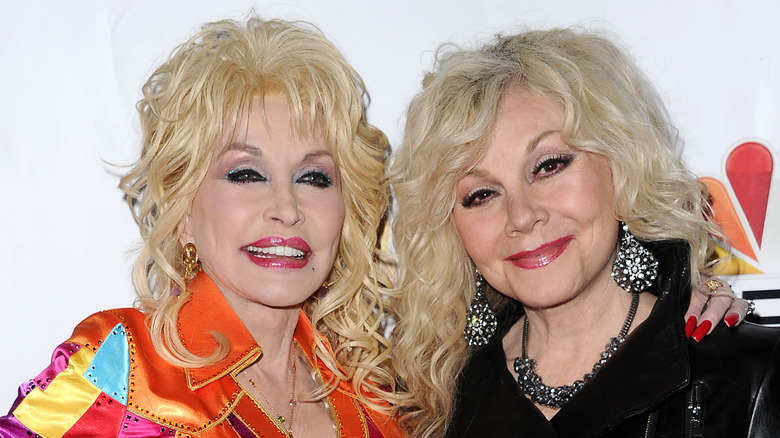
While Parton cared deeply about child welfare, she also knew that it didn't take a lot of money to raise a family with love. In possibly her most famous song about family, 1971's "Coat of Many Colors," she sings about the jacket her mother stitched together from rags, "Although we had no money, I was rich as I could be / In my coat of many colors my mama made for me." It wasn't the first time Parton wrote about her humble beginnings. In 1969's "In the Good Old Days (When Times Were Bad)," she reminded herself that, "no amount of money could buy from me the memories that I have of then," even though "anything at all was more than we had."
Despite the hard times, Parton idealized life in 1973's "My Tennessee Mountain Home," a place where she could watch the children in her family grow up, church was only a Sunday walk away, and "honeysuckle vine clings to the fence along the lane, their fragrance makes the summer wind so sweet / And on a distant hilltop, an eagle spreads its wings, and a songbird on a fence post sings a melody." Despite her dedication to social issues, she proclaimed in 1991's "Family" that family always came first. "Some are preachers, some are gay / Some are addicts, drunks and strays / But not a one is turned away when it's family," she declared.
Dolly Parton was a career woman, too
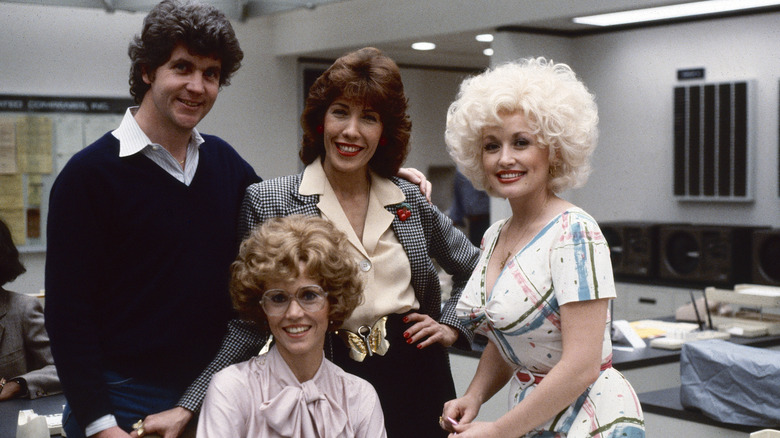
For Parton, family, community, and work were obviously intertwined. In addition to singing about getting "up before sunup to get the work done up" in "In the Good Old Days (When Times Were Bad)," Parton addressed the theme again in "Poor Folks' Town" on the 1980 album "9 to 5 and Odd Jobs." Even though "the work is hard and the hours are long" and it didn't pay enough to buy fancy things, she sang that her people were "rich folks livin' in a poor folks town," because "we got no money, but we're rich in love."
But Parton's most blistering work anthem was the perpetually relevant "9 to 5," named after the 9to5 organization of activists who later became the National Association of Working Women. "9 to 5" expresses a worker's complicated relationship with her employment, enthusiastically narrating that she "tumbles[s] out of bed and I stumble to the kitchen / Pour myself a cup of ambition," but fuming that, "They just use your mind and they never give you credit / It's enough to drive you crazy if you let it." She declared a more positive outlook on that mug of aspiration in the same album's "Working Girl," describing the eponymous career woman as "the kind that don't look down until it's from the top" and marveling that "she goes so many places, and she does so many things," but Parton had one of the most realistic viewpoints on working for a living in all of Nashville.
Nobody understood love like Dolly Parton
Of course, where Parton's skills really flourished was when she was writing about love. Dolly Parton and her husband, Carl Dean, had one of the great love stories, so she knew plenty about it, and she made that clear when she sang, "I love you in a million ways and for a million reasons / But more than this, I love you as you are" in 1977's "You Are." But she understood heartbreak, too. In 1982's "Do I Ever Cross Your Mind?" she sang about "walking through fields where we walked" but finding, as we all inevitably do, that "the flowers still grow, but they don't smell sweet as they did when you picked them for me."
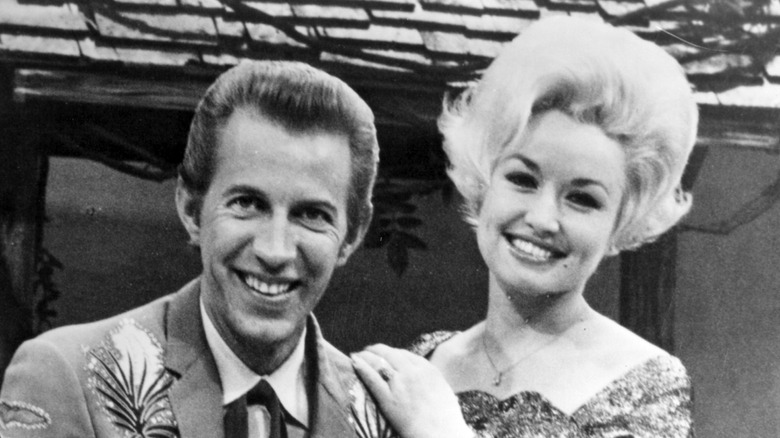
You can't talk about love and Dolly Parton, however, without mentioning what may be the greatest love song of all time, even though 1974's "I Will Always Love You" isn't technically a love song at all. When she sang, "I hope life treats you kind, and I hope you have all you ever dreamed of / And I wish you joy and happiness, but above all of this, I wish you love," Parton was thinking of Porter Wagoner, whose variety show launched her career before she left to pursue solo success. Leave it to Dolly Parton to make a business relationship sound as intense as an epic romance.